When I first decided to start strength training at home after 50, I felt completely overwhelmed. Walking into a sporting goods shop felt like entering a foreign country where everyone spoke a language I didn’t understand. Dumbbells, kettlebells, resistance bands, barbells—where was I supposed to start? And more importantly, how much was this going to cost me?
Here’s the good news: you don’t need a fancy gym membership or thousands of pounds worth of equipment to build strength, increase bone density, and feel more capable in your daily life. In fact, you can create an incredibly effective home strength training setup for under £200.
Let me share what I’ve learned through my own fitness journey about the essential equipment you actually need to get started with strength training at home after 50.
Why Strength Training at Home After 50 Matters
Before we dive into the shopping list, let’s talk about why this matters. After 50, we naturally lose muscle mass—about 3-8% per decade if we don’t actively work against it. This isn’t just about aesthetics; it’s about maintaining independence, preventing falls, protecting our bones, and keeping up with the activities we love.
Strength training helps combat this muscle loss, improves balance, boosts metabolism, and yes, makes everyday tasks like carrying shopping or playing with grandchildren much easier. The beauty of training at home is that you can fit it around your schedule, work at your own pace, and avoid the intimidation factor that gyms can sometimes create.
The Essential Home Strength Training Kit (Under £200)
Let me walk you through the equipment that’s actually worth your money. I’ve tested various pieces over the past year, and these are the items that consistently prove their value.
Adjustable Dumbbells (£80-120)
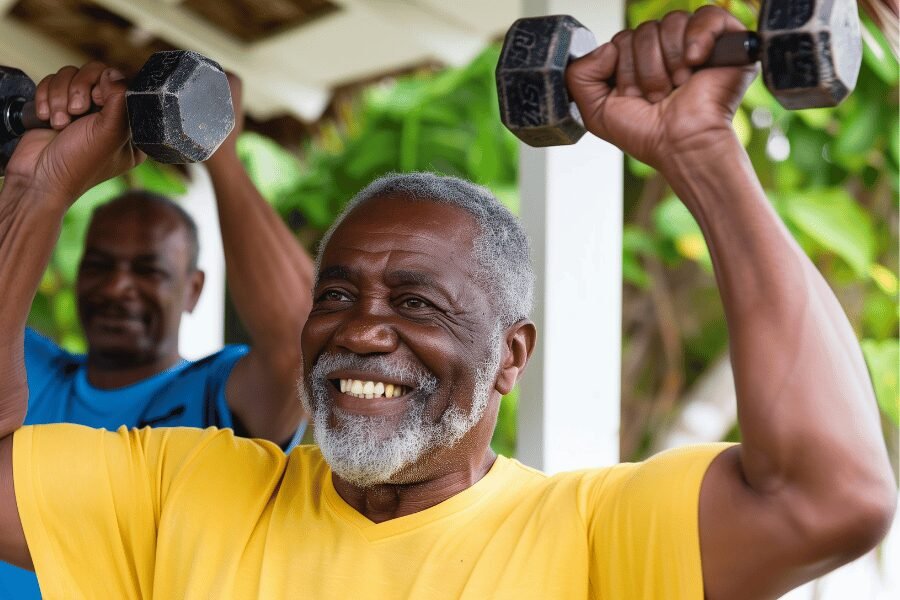
This is where I’d invest the bulk of your budget. Adjustable dumbbells are the cornerstone of strength training at home after 50. Unlike buying multiple pairs of fixed-weight dumbbells, adjustable versions let you change the weight with a simple twist or pin adjustment.
Look for a set that goes from around 2kg up to at least 12kg per dumbbell. Brands like Bowflex or PowerBlock offer excellent quality, but you can also find perfectly good alternatives from Amazon Basics or Argos for under £100.
Why dumbbells? They’re incredibly versatile. You can do chest presses, rows, shoulder presses, bicep curls, tricep extensions, squats, and lunges—basically a full-body workout with just this one piece of equipment.
Resistance Bands Set (£15-25)
Don’t underestimate these colourful strips of rubber. A good resistance band set is one of the most cost-effective purchases you’ll make for strength training at home after 50.
I recommend getting a set with varying resistance levels (usually colour-coded from light to heavy) and ideally one that includes door anchors and handles. These typically cost between £15-25 from retailers like Decathlon or Sports Direct.
Resistance bands are particularly brilliant for shoulder work, which becomes increasingly important as we age. They’re also much gentler on joints than weights, making them perfect for warming up or on days when your joints feel a bit creaky.
Yoga Mat (£15-30)
Even if you’re not doing yoga, a good quality mat is essential. You’ll use it for floor exercises like planks, glute bridges, and core work—all crucial components of strength training at home after 50.
Don’t skimp here and buy the cheapest option. A mat that’s too thin will leave you uncomfortable during floor exercises, and one that’s too slippery could be a safety hazard. Look for something around 6mm thick with good grip. Yoga-Mad and Manduka make excellent options, but <u>TK Maxx</u> often has branded mats at significantly reduced prices.
Stability Ball (£15-25)
A stability ball (also called a Swiss ball or exercise ball) adds another dimension to your home workouts. It’s fantastic for core work, can be used as a bench for chest presses, and helps with balance training.
Choose a size based on your height: if you’re under 5’4″, go for 55cm; between 5’4″ and 5’11”, choose 65cm; and over 5’11”, opt for 75cm. When you sit on it, your knees should be at a 90-degree angle.
Foam Roller (£10-20)
This might seem like a luxury, but trust me on this one. After you start strength training at home after 50, you’ll quickly discover muscles you didn’t know you had. A foam roller is brilliant for self-massage, helping to ease muscle soreness and improve flexibility.
The basic models work perfectly well—you don’t need anything fancy with vibrations or special textures. A simple foam roller from Decathlon or Amazon does the job beautifully.
Ankle Weights (Optional, £15-25)
If you have budget left over, ankle weights are a useful addition. They add resistance to leg lifts, kickbacks, and can make bodyweight exercises more challenging as you progress.
What You DON’T Need to Buy
Let me save you some money. Here’s what the fitness industry wants to sell you but you really don’t need when starting strength training at home after 50:
Fancy home gym machines – These are expensive, take up loads of space, and usually end up as expensive clothes hangers. The equipment I’ve listed above is far more versatile.
Weighted vests – While potentially useful later, they’re not necessary for beginners and can strain your back and joints.
Expensive smart equipment – Those dumbbells that connect to apps and cost £300+? Save your money. A simple stopwatch on your phone works just fine.
Getting Started Safely
Now that you’ve got your equipment, let’s talk about using it safely. This is crucial when starting strength training at home after 50.
Start with bodyweight movements first – Before adding weights, master the basic movement patterns: squats, lunges, press-ups (on knees is absolutely fine), and planks.
Form over weight – It’s better to do an exercise with perfect form using a light weight than to heap on the kilos with terrible form. Poor form leads to injury, and injuries derail progress.
Warm up properly – Spend 5-10 minutes moving your joints through their full range of motion before picking up any weights. Your resistance bands are perfect for warming up shoulders, and gentle bodyweight squats warm up your lower body.
Progress gradually – Increase weights or resistance by small amounts. If something feels too easy, add just 1-2kg more, not 5kg.
Sample Workout Structure
Here’s how I structure my workouts with this equipment:
Monday & Thursday: Upper Body
- Dumbbell chest press (on stability ball)
- Dumbbell rows
- Shoulder press
- Bicep curls
- Tricep extensions
- Resistance band face pulls
Tuesday & Friday: Lower Body
- Goblet squats (holding one dumbbell)
- Dumbbell lunges
- Glute bridges
- Calf raises
- Resistance band side steps
Wednesday & Saturday: Core & Balance
- Planks (various positions)
- Dead bugs on mat
- Stability ball roll-outs
- Single-leg stands
- Resistance band rotations
Sundays are for rest, foam rolling, and gentle stretching.
Making It Stick
The best equipment in the world won’t help if it sits unused in the corner. Here’s how I make strength training at home after 50 a sustainable habit:
Create a dedicated space – Even if it’s just a corner of your bedroom, having your equipment visible and ready makes it far more likely you’ll use it.
Schedule it like an appointment – Put it in your diary. Treat it with the same respect you’d give a doctor’s appointment.
Track your progress – Whether it’s in a notebook or an app, recording what you did last time makes the next session easier to plan and helps you see how far you’ve come.
Find a workout buddy – Even if you’re training at home, having someone to check in with makes a huge difference. My friend and I text each other after our workouts—that accountability is gold.
The Investment That Keeps Giving
Let’s put this £200 investment into perspective. A gym membership typically costs £30-50 per month. Within 4-6 months, your home equipment has paid for itself. But beyond the financial savings, training at home offers something priceless: convenience and consistency.
There are no excuses about bad weather, no time wasted travelling, no waiting for equipment, and no feeling self-conscious. You can train in your pyjamas if you want to (I definitely have).
More importantly, strength training at home after 50 gives you control over your health and fitness journey. Every rep you complete, every weight you lift, is an investment in your future self—the one who’ll still be active, independent, and capable well into their 70s, 80s, and beyond.
Your Next Steps
If you’re ready to start, here’s my advice: don’t wait until you have all the equipment. Start with what you can afford now. Even just a set of resistance bands and a mat is enough to begin. Add the other pieces as your budget allows.
The most important thing isn’t having perfect equipment—it’s starting. Your future self will thank you for taking this step today.
Remember, we’re not training to become bodybuilders or athletes. We’re training to maintain and improve our quality of life, to keep doing the things we love, and to feel strong and capable in our own bodies. That’s worth far more than £200.
So, what are you waiting for? Let’s get started.